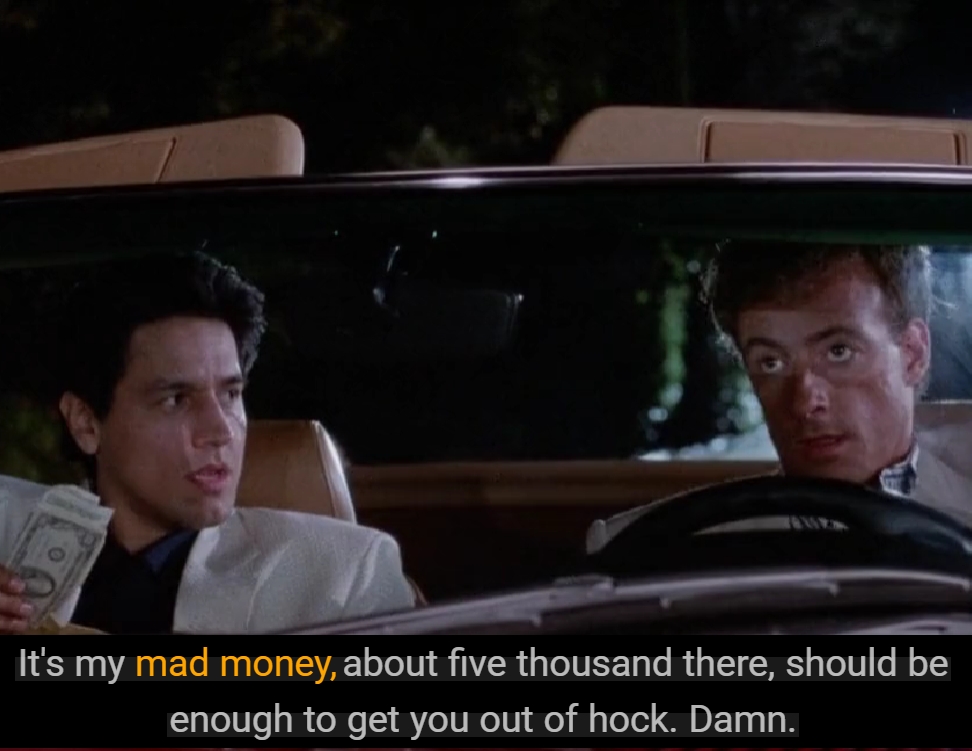
短语"mad money"并不是指“发疯的钱”,而是指“应付紧急情况的备用金,储蓄金”。 例如:小玲每次发工资,都会把其中的一部存起来作为"mad money(紧急情况下的备用金)",以备不时之需。
He spent all his mad money on a new pair of shoes.
他把所有的备用金都花在了一双新鞋上。
She always keeps a little mad money in her purse, just in case she sees something she absolutely has to have.
她总是在钱包里留一点零花钱,以防她看到非买不可的东西。
My grandmother gave me $50 as mad money for my trip, telling me to spend it on something fun.
我奶奶给了我50美元作为旅行的零用钱,告诉我要把它花在有趣的事情上。
Before leaving the house, he grabbed some mad money from the drawer, thinking he might stumble upon a street fair.
离开家之前,他从抽屉里拿了一些零用钱,想着他可能会碰到一个街头集市。
She saved her mad money for months, dreaming of buying a designer dress she had her eye on.
她存了几个月的零用钱,梦想着买一条她一直想要的设计师裙子。
They decided to use their mad money to splurge on a fancy dinner, celebrating their anniversary in style.
他们决定用他们的零用钱大吃一顿,以此庆祝他们的周年纪念。
短语“mad money”的起源可以追溯到1922年,由Howard J. Savage在一篇关于Bryn Mawr俚语的文章末尾首次提出。当时Savage对其的定义是“女孩在她与男伴发生争执后想独自回家时所携带的钱”。到了1946年,C.M. Woodard记录了该词汇的两种含义:“女孩在约会时随身携带的钱,以备不时之需,如与同伴闹翻想提早回家;或者用于女性的小额消费”。 Webster's Third是第一本记录包含双重含义的字典,其中解释为“女孩在约会时为了防止不想要的亲昵行为而携带的车资,以便有手段逃离男伴;宽泛来说,就是女性为紧急情况所备的小额金钱。” 乔治·贾沃(George Javor)在他的文章中提出,由于“mad”一词从生气到疯狂都有涵盖,这也使得其意义出现了转变。贾沃还聚集了一些学生完成的问卷,询问他们对“mad money”的定义;92%的学生给出了与字典中定义不同的新含义,即“愚蠢地、用于不需要的东西、冲动或轻率的消费、甚至是疯狂地花费的钱”。
 满分语法
满分语法